
How ‘zombie mortgages’ are coming back to haunt homeowners
Clip: 2/5/2026 | 10m 51sVideo has Closed Captions
How ‘zombie mortgages’ are coming back to haunt homeowners years later
They’re called “zombie mortgages” — debts that homeowners thought were forgiven long ago, only to learn that they still exist and could cost them their homes. Economics correspondent Paul Solman and producer Diane Lincoln Estes report on these back-from-the-dead debts, in partnership with the documentary news group Retro Report.
Problems playing video? | Closed Captioning Feedback
Problems playing video? | Closed Captioning Feedback
Major corporate funding for the PBS News Hour is provided by BDO, BNSF, Consumer Cellular, American Cruise Lines, and Raymond James. Funding for the PBS NewsHour Weekend is provided by...
Support provided by:

How ‘zombie mortgages’ are coming back to haunt homeowners
Clip: 2/5/2026 | 10m 51sVideo has Closed Captions
They’re called “zombie mortgages” — debts that homeowners thought were forgiven long ago, only to learn that they still exist and could cost them their homes. Economics correspondent Paul Solman and producer Diane Lincoln Estes report on these back-from-the-dead debts, in partnership with the documentary news group Retro Report.
Problems playing video? | Closed Captioning Feedback
How to Watch PBS News Hour
PBS News Hour is available to stream on pbs.org and the free PBS App, available on iPhone, Apple TV, Android TV, Android smartphones, Amazon Fire TV, Amazon Fire Tablet, Roku, Samsung Smart TV, and Vizio.
Providing Support for PBS.org
Learn Moreabout PBS online sponsorshipWILLIAM BRANGHAM: They are# called zombie mortgages,## debts that homeowners thought were# forgiven or satisfied long ago,## only to learn that they still exist and# that they could cost them their homes.
Economics correspondent Paul Solman and producer## Diane Lincoln Estes have our look# at these back-from-the-dead debts.
This story is a partnership with Retro# Report, which is a documentary news group## that delves back into major events of the# past to understand their relevance today.
PAUL SOLMAN: Single dad Terence Hardin bought# this home in Bowie, Maryland, 20 years ago.
TERENCE HARDIN, Former Homeowner:# Four-bedroom house, single-family,## nice yard, very friendly neighbors.
PAUL SOLMAN: Hardin took out a# $316,000 mortgage for the purchase,## a $35,000 second mortgage soon after.
TERENCE HARDIN: So I had a mortgage and a second# mortgage after owning the property for a year.
PAUL SOLMAN: But then the housing bubble# burst.
Home prices plunged.
Hardin,## like millions of Americans, owed# more than his house was worth.## So he was vastly relieved to get a loan# modification through a government program.
TERENCE HARDIN: The payment is# very much reasonable.
There is## no second mortgage, and I'm able to breathe.
PAUL SOLMAN: For the next eight years,# Hardin paid his mortgage.
By September 2023,## he had built almost $200,000 in# equity.
Then his neighbor called.
TERENCE HARDIN: There was some service# that was taking stuff out of my home in## trash bags and plastic bags and putting# it on the lawn, at which point I,like,## raced home from work in order to try# to find out what was going on.
I was## informed by the sheriff's department that# I had four hours to collect my belongings.
PAUL SOLMAN: Hardin was# being evicted from his home.
TERENCE HARDIN: Furniture, dishes,# medications, foods, toys, pictures## just all shoved in a black bag# and strung across the front yard.
PAUL SOLMAN: Daughter Olivia was then 14.
How did you react?
OLIVIA HARDIN, Daughter of Terence Hardin:# I just saw all o.. front lawn in black bags.
I was just# so -- I was -- I was just in shock.
PAUL SOLMAN: So what happened?
Kind# of like a zombie in a horror film,## that second mortgage Hardin believed# to have been modified and rolled in## with his first all those years# ago had risen from the dead.
ANDREW ENGEL, Dann Law: A zombie mortgage# is a mortgage that the borrowers thought## was dead because of inactivity by the lender# for so many years, and then out of the blue## recently has risen from the dead, so# to speak, to claim its pound of flesh.
PAUL SOLMAN: Foreclosure attorney Andy Engel# explains that second mortgages were worth so## little in the wake of the housing collapse that# lenders simply didn't bother to collect on them.
ANDREW ENGEL: However, they did# bundle these mortgages up and## sell them on the secondary market# often for pennies on the dollar.
BETH JACOBSON, Strategic Housing Solutions:# The judge in New York used to talk about## these loans are passed around like# a whiskey bottle at a frat party.
PAUL SOLMAN: Homeowner advocate Beth Jacobson.
BETH JACOBSON: That's what these# second mor.. packaged and repackaged and repackaged and sold.
ANDREW ENGEL: And the people# who bought those loans then## just sat and waited.
And they were# waiting for market values to come## back on the real estate to make those# mortgages actually have value again.
PAUL SOLMAN: Post COVID-19 pandemic,## that's just what happened across the# country, as property values soared.
ANDREW ENGEL: And, all of a sudden, those# dead mortgages that had no value at all## now have value, and the owners of those# mortgages are filing for closure cases.
PAUL SOLMAN: Homeowner Terence# Hardin says he was blindsided.
TERENCE HARDIN: I got nothing from these people.# I have got nothing from them.
I did not find out## until the day I was removed from my home that# there was even a second mortgage out there.
BETH JACOBSON: It's not bad enough that this# zombie second is coming back to collect on## a mortgage that you may have taken out 20# years ago and forgot about.
They're adding## interest every single day, even though# they didn't send mortgage statements out.
PAUL SOLMAN: According to Bloomberg News,## more than 600,000 second mortgages issued before# the financial crisis could.. Jerry and Sharon Lomurno took out a# $30,000 second mortgage on their Madison,## Ohio, home back in 2006.
They thought it was# discharged in bankruptcy a few years later.
JERRY LOMURNO, Homeowner: For over 15 years,## we had just assumed that the# debt had been wiped away.
PAUL SOLMAN: Then, in October# 2024, Jerry got a phone call.
MAN: Jerome, good morning.# It's Isaac with SMS Financial.
JERRY LOMURNO: And he says, well, we have# an outstanding debt of roughly $75,000,## $80,000 with interest that hasn't been# paid on this since roughly 2008-2009.## And we need to know what you're willing to# pay in order to bring your account current.
Then came the calls from house# hunters looking for a bargain.
SHARON LOMURNO, Homeowner: This guy says: "Hi.# I'm so-and-so."
He goes: "I was wondering if## you're interested in selling your house."
And I# said: "No.
Why would I want to sell my house?"
And he goes: "Well, because there's a lien on it# and you're in foreclosure."
And I was stunned.
ANDREW ENGEL: OK, so this is the document.
PAUL SOLMAN: Engel, the Lomurnos' lawyer,## says there's no proof SMS Financial actually# owns the second mortgage in question.
ANDREW ENGEL: And there's a further issue# of whether SMS Financial can charge interest## during a time period when it did not issue monthly# statements.
And that is a federal law requirement.
PAUL SOLMAN: Neither SMS Financial nor their# lawyers responded to requests for interviews,## but in public notices, the Consumer# Financial Protection Bureau warned that## federal laws generally require debt collectors# to provide homeowners with periodic statements.
Moreover, it said, it's illegal for debt# collectors to sue to collect debts past## the statute of limitations.
The bureau had# been investigating zombie debt collectors,## but its work was essentially shut down# last February by the Trump administration.
KRISTI KELLY, Kelly Guzzo: We're trying to stand# up for these consumers since nobody else is.
PAUL SOLMAN: Lawyer Kristi Kelly# has filed numerous individual and## class action lawsuits against# zombie mortgage collectors.
KRISTI KELLY: For most of the loans that I see,## they are being assessed retroactive# interest for every single month for 10,## 15 years for times where they did not receive# statements or were explicitly told or provided## communications stating that interest# wouldn't be charged for that time frame.
PAUL SOLMAN: In one class action# settlement, zombie debt collector## Dyck-O'Neal canceled the retroactive# interest that had charged Kelly's client.
KRISTI KELLY: We learned# through discovery that his## loan was purchased for approximately# 87 cents.
And prior to coming to me,## he was told he had to pay $170,000 or# they were going to foreclose on his loan.
PAUL SOLMAN: Now, a few states have passed# laws to crack down on deceptive practices,## including Virginia, where Kelly's based.
KRISTI KELLY: We were able to pass# legislation that required these zombie## second mortgage holders to certify in an# affidavit, before you take someone's home,## for all time periods where you're assessing# interest, that statements were sent.
ANNOUNCER: This is "The Passive# Income Attorney" podcast.
PAUL SOLMAN: But for debt collectors, these# zombie loans are great investment opportunities.
JAMES MAFFUCCIO, Co-Founder, Aspen Funds: One# man's toxic assets are another man's treasure.
PAUL SOLMAN: James Maffuccio# co-founded Aspen Funds,## which buys second mortgages,# including Terence Hardin's.
JAMES MAFFUCCIO: We like to see the# homeowners making the payment on the## 1st.
So now we know we have got a property# that somebody's taken care of for the most## part.
They're living in it and they're# paying down the first mortgage.
So our## position's actually getting stronger as they# continue to pay down that first mortgage.
PAUL SOLMAN: Maffuccio has described his# investment strategy on multiple podcasts,## but didn't respond to our interview requests.
JAMES MAFFUCCIO: If we buy a million dollars# worth of these non-performing second mortgages,## we are going to receive back $2.2 million to $2.5# million.
It's just been consistently good for us.
PAUL SOLMAN: Good for them,# not so good for the homeowner.
JAMES MAFFUCCIO: We can reach# out to the borrower.
Usually,## they're in denial.
And they will say, we don't# really owe that.
We thought that got charged off,## whatever, whatever.
And so we will start# the foreclosure process.
And it's really## just an incentive tool, because we# do not like the foreclose on people.
PAUL SOLMAN: And, of course, people# don't like to be foreclosed on.
ANDREW ENGEL: You get a lot of anxiety, a lot of# fear.
That fear is what motivates people to take## actions, pay off the loan, do anything to avoid# this.
I personally believe the buyers of these## debts are banking on that drastic reaction of# initial fear and trying to avoid losing the house.
PAUL SOLMAN: Unfortunately,# for Terence and Olivia Hardin,## their home was sold in foreclosure# before they knew what was happening.
BETH JACOBSON: And the way Maryland works is# that if you, as the homeowner, don't file a## motion in the court, you never see the light# of day of a court.
It was just pushed through.
PAUL SOLMAN: Maffuccio's investment fund# sold the Hardins' home to itself, paid the## balance on the first mortgage, then resold the# home with a likely profit of over 100 grand.
TERENCE HARDIN: All of the equity# that I have built in my house was## stolen right out from under us.
And there's# nothing I can do about that at this point.
PAUL SOLMAN: Terence Hardin now rents# an apartment not far from his old house## so his daughter Olivia can go to the same school.
TERENCE HARDIN: The home was going to be a# source of monies for tuition fees.
And that## is gone.
It's no longer I can rely on that.# So it's almost like starting all over again.
JERRY LOMURNO: I pray every single# day that this foreclosure will go## away and that Sharon and I will# be able to stay in this house.
PAUL SOLMAN: The Lomurnos are fighting# debt collector SMS Financial in court.
JERRY LOMURNO: We're really not in a# position to be able to pay $75,000,## on a $30,000 second mortgage from 2006 that# hasn't been enforced for over 15 years.
PAUL SOLMAN: And as of January, they began# mediation negotiations with SMS Financial.
For the "PBS News Hour," Paul Solman.
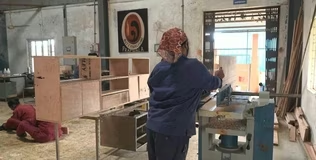
The complicated road to recovery for Indian sex workers
Video has Closed Captions
Clip: 2/5/2026 | 8m 58s | The complicated road to recovery for Indian women forced into sex work (8m 58s)
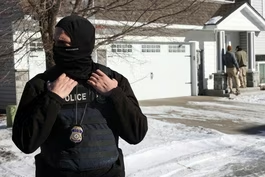
How public opinion against ICE may affect funding showdown
Video has Closed Captions
Clip: 2/5/2026 | 5m 23s | How public opinion shifting against ICE may affect the DHS funding showdown in Congress (5m 23s)

Humanitarian group head urges nations to step up Sudan aid
Video has Closed Captions
Clip: 2/5/2026 | 5m 43s | Head of humanitarian group urges nations to step up Sudan aid to prevent ‘biblical’ famine (5m 43s)

News Wrap: Trump rejects extension of New START treaty
Video has Closed Captions
Clip: 2/5/2026 | 5m 54s | News Wrap: Trump rejects extension of expired U.S.-Russia nuclear arms treaty (5m 54s)
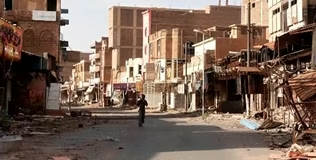
RSF siege of Sudanese city leaves overwhelming suffering
Video has Closed Captions
Clip: 2/5/2026 | 5m 7s | Sudanese army finds overwhelming suffering after breaking RSF siege of embattled city (5m 7s)
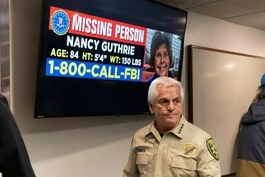
Search continues for Nancy Guthrie as authorities seek leads
Video has Closed Captions
Clip: 2/5/2026 | 3m 45s | Search continues for Nancy Guthrie as authorities seek leads to find suspects (3m 45s)
What to know about South Carolina’s big measles outbreak
Video has Closed Captions
Clip: 2/5/2026 | 6m 43s | What to know about South Carolina’s big measles outbreak and who is most at risk (6m 43s)
Providing Support for PBS.org
Learn Moreabout PBS online sponsorship
- News and Public Affairs

FRONTLINE is investigative journalism that questions, explains and changes our world.

- News and Public Affairs

Amanpour and Company features conversations with leaders and decision makers.











Out Of The Dark: Teens Talk Mental Health
Support for PBS provided by:
Major corporate funding for the PBS News Hour is provided by BDO, BNSF, Consumer Cellular, American Cruise Lines, and Raymond James. Funding for the PBS NewsHour Weekend is provided by...